MAISON PAWZCATTERY
Inquire Now
The Persian is one of the oldest recognised breeds in the cat fancy — sweet, quiet, heavily boned, and carrying the longest, densest coat in the domestic cat world. The breed's documented history goes back to around 1520, likely descended from longhairs crossed with Angoras out of Turkey, and Persians were already being shown by colour at Britain's very first cat show in 1871. CFA adopted its first official Longhair Standard in 1914; the version below is simply the modern descendant of that same document, refined over a century of showing rather than reinvented. Every cat we breed is measured against it, and it's worth actually reading rather than skimming past, because it explains a lot about why Persians look, and need care, the way they do.
CFA's own standard calls for balance: a short nose, yes, but not so short it causes breathing problems, chronic eye discharge, or dental crowding. CFA's guidance to breeders is blunt about this — pushing hard for one striking trait, a very domed forehead, oversized eyes, very fine boning, tends to drag the cat's hidden faults along for the ride, and pushing Persian head type to its extreme can raise the risk of hydrocephalus. We breed toward the standard and toward a cat that can breathe, eat, and see comfortably. Those two goals should never be in tension, and if a line makes them feel like they are, that's a sign to back off, not push further.
For anyone who wants the judging side of this rather than just our own summary: CFA scores a Persian out of 100 points, split across head (30 — including eye size/shape and ear shape/set), body type (20 — shape, bone, and tail length), coat (10), balance (5), refinement (5), colour (20), and eye colour (10). Head and body type alone make up half the total score, which tells you where a judge's eye actually goes first.
A few specifics worth knowing if you're new to showing or evaluating a pedigree: paws should carry five toes in front and four behind, with any other count a disqualification. So is a kinked tail, a locket or button of white on an otherwise solid cat, crossed eyes, or a skull asymmetrical enough to throw the face off-center. None of these are cosmetic nitpicks — most track back to a genuine structural or health concern, which is exactly why they're written into the standard rather than left to a judge's taste.
Eye colour is also spelled out precisely per colour, not left general: solid whites may be deep blue, brilliant copper, or odd-eyed (one of each, matched in depth); Himalayan (pointed) cats must have deep vivid blue eyes, full stop — white toes or any other eye colour disqualifies a pointed cat outright; and the Silver & Golden division requires green or blue-green eyes, with copper, yellow, gold, or amber all disqualifying. It's a good reminder that "eye colour" isn't one flexible spectrum — it's tied tightly to which colour division a cat is actually in.
Paraphrased from CFA's official Persian Show Standard (revised 2025); see Sources & Further Reading.
CFA splits Persians into colour classes for showing, and Maison Pawz works primarily across three of them.
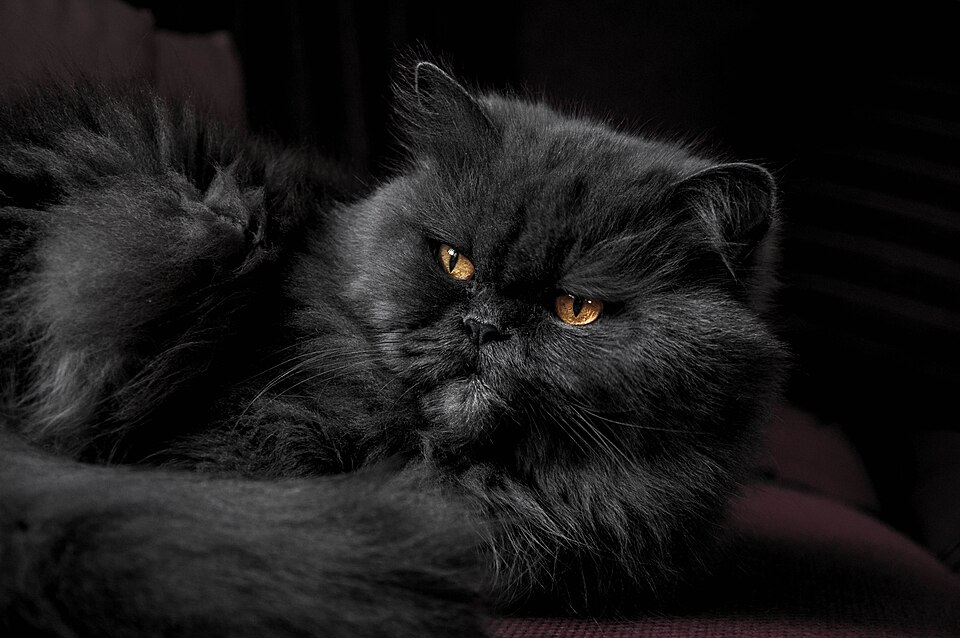 Solid
Solid
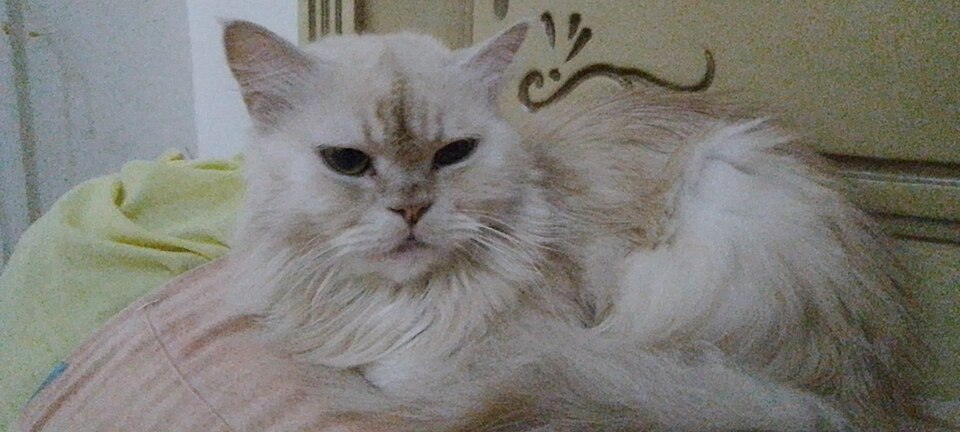 Bi-colour
As a breed, Persians run calm, gentle, and undemanding next to louder, more athletic breeds. They'd generally rather have a predictable routine and a good windowsill than constant activity, which makes them a genuinely good fit for someone who wants an affectionate but low-key companion, not a cat that's redecorating the living room at 3 a.m. That same quiet temperament is exactly why the grooming and health chapters ahead matter so much — a Persian is not going to loudly announce that something's wrong. You have to notice.