MAISON PAWZCATTERY
Inquire Now
Before we get into anything Persian-specific, it's worth backing up to what a cat actually is. Persians are still cats underneath all that coat — obligate carnivores with a hunting-shaped brain, and that fact explains more of their daily behaviour than most owners expect.
| Stage | Approx. age | What's happening |
|---|---|---|
| Neonatal | 0–2 weeks | Eyes and ears closed; fully dependent on the queen for warmth, food, and elimination. |
| Transitional | 2–4 weeks | Eyes open, first steps, baby teeth erupt, beginning to self-regulate temperature. |
| Socialisation window | 3–9 weeks | The critical period for human and animal socialisation — experiences here shape lifelong temperament. |
| Weaning | 4–10 weeks | Gradual transition from milk to solid food; litter box habits solidify. |
| Juvenile / kitten | 10 weeks–6 months | Rapid growth, peak play drive, permanent teeth coming in. |
| Adolescent | 6–18 months | Sexual maturity begins; Persians mature slower than shorthair breeds. |
| Adult | 1–7 years | Physically mature; the bulk of a cat's healthy life. |
| Mature / senior | 7+ years | Metabolism slows; more frequent veterinary monitoring is worthwhile. |
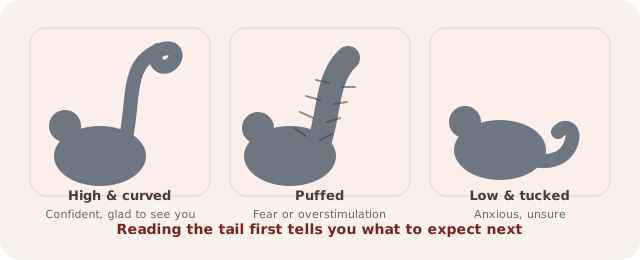
Cats layer body language, scent, and vocalisation, and most of it is legible once you know what to look for. A slow blink is about as close as a cat gets to saying "I like you" — half-close your own eyes back and most cats will register it. Tail position tells you almost everything else: held high with a gentle curl at the tip means confident and glad to see you, while a puffed tail means fear or overstimulation, not necessarily aggression. Purring is usually contentment, but we've seen it plenty of times in cats that were actually in pain or distress, so don't read it as an automatic "everything's fine." Kneading — "making biscuits" — is a leftover nursing behaviour from kittenhood and is almost always a comfort signal, even on a fifteen-year-old cat.
Cats mark territory with scent as much as with sight, which is easy to forget when you're only watching. Facial rubbing, scratching, and — mostly in unaltered males — spraying are all forms of marking, not misbehaviour. Once you see it that way, it changes how you respond to a cat scratching the sofa arm instead of the post you bought: it's not spite, it's geography.