MAISON PAWZCATTERY
Inquire Now
This chapter is optional for pet owners and essential for breeders. It is written to be read once, slowly, rather than skimmed — the logic builds on itself.
Strip away every modifier and there are only two base pigments in cats: black and red (sometimes called orange). Every colour a Persian can be is one of these two pigments, modified by a small set of additional genes.
The gene for black versus red sits on the X chromosome. Because male cats have one X, a male is either black-based or red-based, never both. Females have two X chromosomes and can carry one of each — which is what produces tortoiseshell, the patchwork of black and red sometimes called the "third" base colour, and why tortoiseshell cats are almost always female.
One practical breeder shortcut falls straight out of this: if a sire is red, every single daughter he produces will be either red or tortoiseshell — never plain black-based — because every daughter inherits his one red X along with whichever X her dam contributes. Sons, by contrast, get their only X from the dam, so a red sire tells you nothing about son colour at all. It's a quick sanity check worth knowing before you second-guess a litter result.
The rare exception proves the rule: male calicos and tortoiseshells exist, at roughly 1 in 3,000, and almost all of them carry an extra X chromosome (XXY, the feline version of Klinefelter syndrome) rather than the usual XY — which is precisely why the two-X-chromosome patchwork can show up on them at all. Most male calicos are sterile as a result, with only a small fraction able to reproduce, so this isn't a shortcut to a "rare colour" breeding programme — it's a chromosomal anomaly, not a colour a breeding male can reliably pass on.
Genetically, there's no such thing as a truly solid cat — every solid-coloured Persian is actually a tabby underneath, carrying the non-agouti gene that switches the tabby pattern off in the coat you can see. It's why solid kittens are so often born with faint "ghost" tabby markings on their legs, tail, or forehead that fade as the adult coat grows in — that's completely normal, not a sign the kitten will grow up patterned.
| Modifier | Inheritance | Effect on black | Effect on red |
|---|---|---|---|
| Dilute | Recessive | Black → blue | Red → cream |
| Tabby (agouti) | Dominant | → brown tabby | → red tabby |
| Bicolour | Dominant | Adds white patching | Adds white patching |
| Pointed (Himalayan) | Recessive | → seal point | → flame point |
| Chocolate | Recessive | → chocolate (no effect on red) | No visible effect |
| White | Dominant, epistatic | Masks all colour | Masks all colour |
| Smoke / shaded / shell | Dominant, variable | Silvery undercoat effects | "cameo" silvery effects |
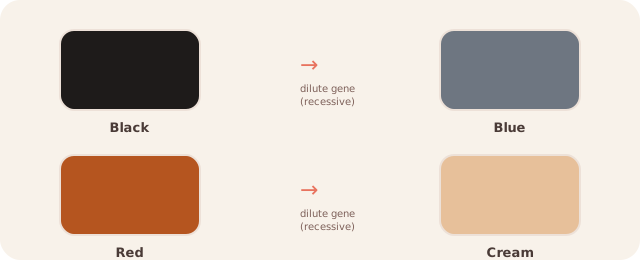
Silver and golden colouring is a special case: it combines the tabby gene, the same "inhibitor" gene that produces smoke, and a separate set of polygenes that control how much of the hair shaft carries colour — from a heavily marked shaded silver to a barely-there chinchilla. Silvers are the older of the two: they've been bred since the late 1800s and were among CFA's original recognised colours. Goldens took much longer to earn recognition — CFA didn't accept chinchilla and shaded goldens into competition until 1976, blue silver and blue golden didn't reach championship status until 2009, and a golden didn't win a national title until 2018. It's a good reminder that a colour being CFA-recognised today doesn't mean it always was; some of the divisions in the table above were genuinely contested within living memory. It is its own advanced topic and worth a dedicated conversation with a mentor once you're breeding for it specifically.
Constructing: black + tabby + bicolour = a brown tabby and white. Black + dilute + smoke = a blue smoke. Tortie + dilute + tabby + bicolour = a blue patched tabby and white.
Deconstructing (the direction breeders actually need, working backward from a cat in front of you): a blue-and-white cat is a black cat with two copies of dilute and at least one copy of bicolour. Because dilute and pointed are both recessive, a cat that doesn't visibly show them can still be carrying one hidden copy — which is why studying a pedigree, not just the cat in front of you, matters before planning a pairing.
Because pointed is recessive, a kitten only shows as pointed if both parents contribute a copy. Two non-pointed CPC carriers bred together can still occasionally produce a pointed kitten — which is a normal, expected outcome of carrying the gene, not a sign anything went wrong. DNA testing for the pointed and chocolate genes is now widely available and takes the guesswork out of predicting these pairings; see Chapter 16.
Every kitten is born with blue eyes, full stop — no exceptions. That's not a colour gene at work; it's simply that the melanocytes (pigment cells) responsible for adult eye colour haven't finished migrating into the iris yet at birth. What happens between about 6 and 16 weeks, as those cells arrive and mature, is where genetics actually takes over.
Odd eyes (heterochromia) is what breeders call a cat with two different-coloured eyes — most often one blue, one copper, green, or gold. It isn't caused by a dedicated "odd eye gene" on its own. Instead, it's a side effect of the dominant White masking gene (the one that makes a cat solid white regardless of what colour it's genetically "hiding" underneath) or the separate white-spotting genes responsible for bicolour patterning. Both can interfere with melanocyte migration into the eye during development — when that interference happens in just one eye instead of both, you get one blue eye and one normally-pigmented eye. This is exactly why odd eyes show up disproportionately in solid white cats and high-white bicolours, including plenty of Persians, and almost never in a solid black or solid blue cat with no white in its genetics at all. Worth being precise here: an odd-eyed cat with just one blue eye is not automatically at meaningfully higher risk of deafness — that elevated risk is specifically tied to full blue-eyed white cats, below, not to odd eyes on their own.
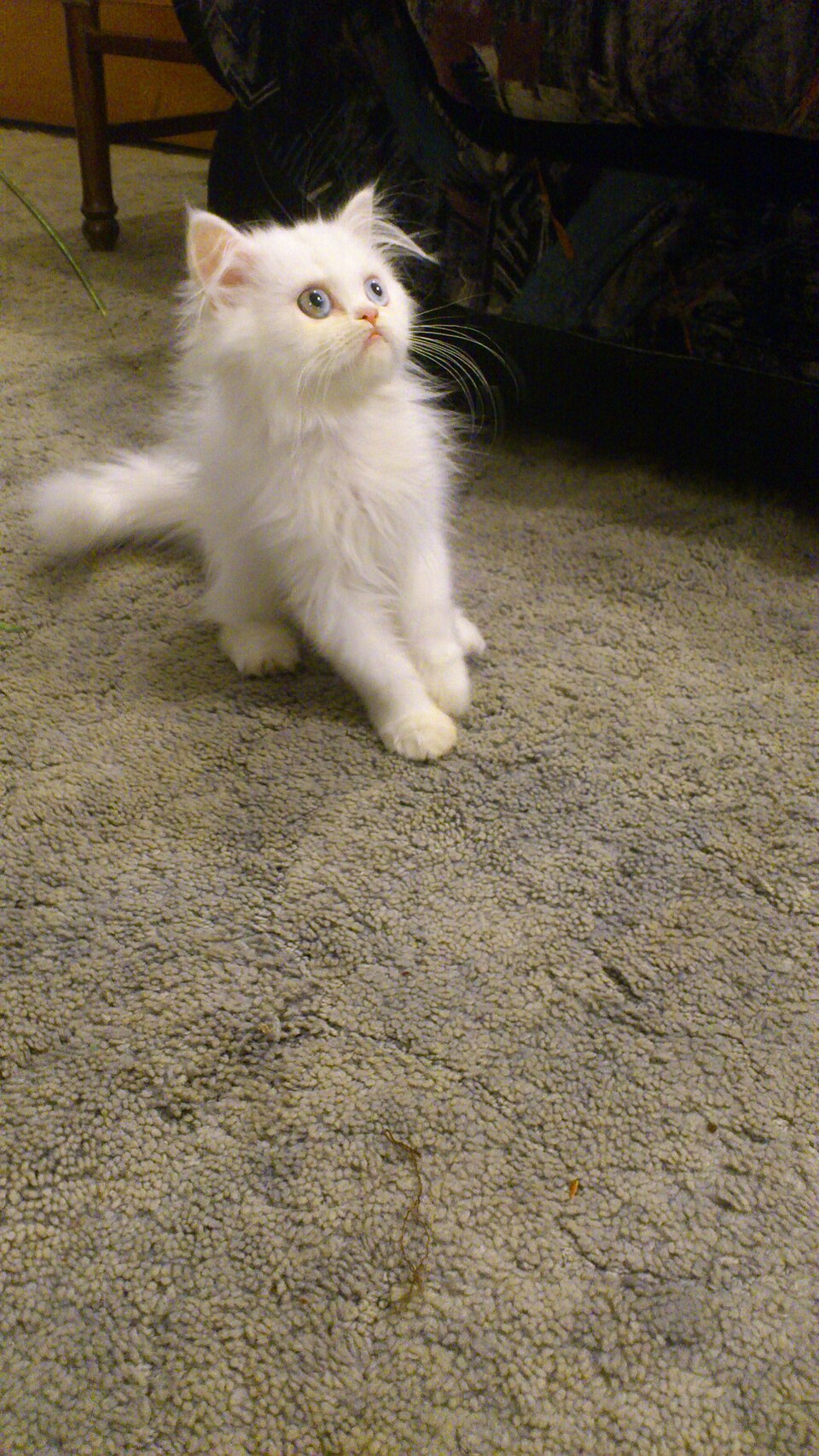
Blue-eyed white cats are the "full" version of the same mechanism — the White gene masks pigment in both eyes, not just one, producing a solid white cat with fully blue eyes. It's a striking look, but it comes with a real, well-documented health consideration: blue-eyed white cats carry a meaningfully higher rate of congenital deafness than the general cat population, because the same pigment-cell disruption that affects the eyes can also affect the inner ear. Responsible breeders working with white lines have kittens BAER-tested (a standardised hearing test, discussed further in Chapter 16) rather than assuming a blue-eyed white kitten hears normally just because it looks alert and responsive.
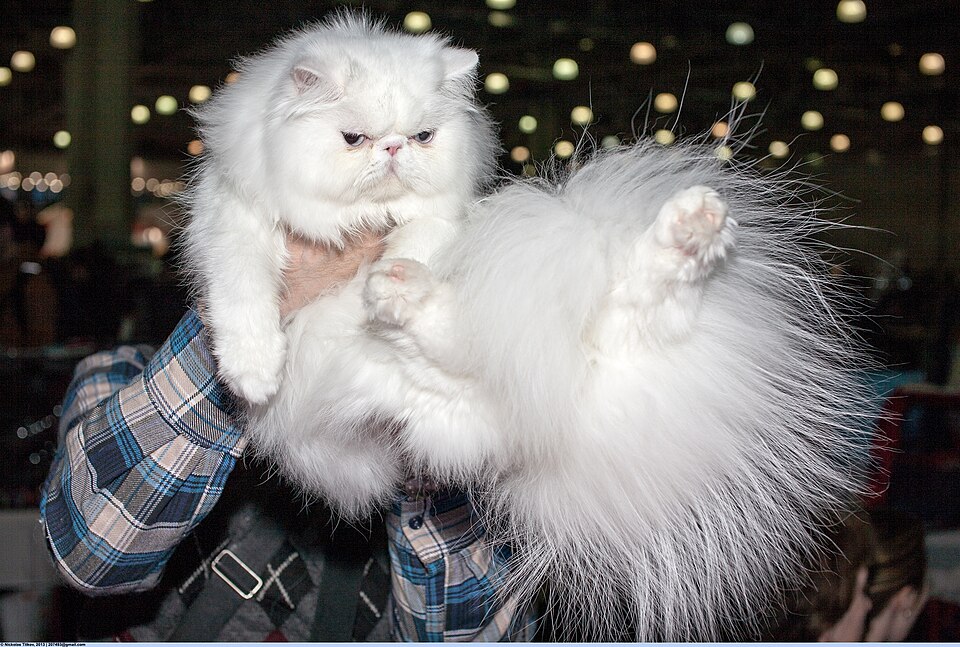
Confusingly, there's a second, genetically distinct cause of blue eyes that has nothing to do with the White masking gene at all. In 2024, researchers identified a specific mutation in the PAX3 gene responsible for a trait now called Dominant Blue Eyes (DBE) — found in select lines of Maine Coons, British Shorthairs, Sphynx, Siberians, and Persians that have been selectively bred for the look since the mid-1990s. Cats with even one copy of the DBE mutation reliably show blue eyes (geneticists call this "complete penetrance"), often paired with some white spotting — but unlike ordinary White-gene blue eyes, DBE is not a masking effect on coat colour at all; the coat colour underneath is unaffected.
The part breeders most need to know: in the founding research, every blue-eyed DBE cat tested showed some degree of hearing loss on formal auditory testing — some in one ear, some in both — while cats without the mutation heard normally. Because the trait is genuinely dominant (a single copy is enough to produce the look), and because it resembles Waardenburg syndrome in humans, DBE is a clear example of why "it's a striking, desirable look" and "it's a safe trait to breed for without testing" are two very different claims. If you're working with a line that carries DBE, BAER testing kittens isn't optional caution — it's the only way to know.