MAISON PAWZCATTERY
Inquire Now
Genetic testing has meaningfully cut down how much hereditary disease shows up in Persians over the past two decades — this isn't a marketing point, it's measurable. Testing your breeding cats isn't optional in a program we'd call responsible. It's one of the clearest, most direct ways to actually improve the breed with each generation instead of just perpetuating whatever a line happens to be carrying.
PKD1 is an autosomal dominant condition — a cat needs only one copy of the gene to be affected — that causes fluid-filled cysts to form on the kidneys, usually visible by ultrasound before 12 months old, with renal failure often developing later in life. It's historically been estimated at roughly 35–45% of Persians worldwide, though widespread DNA testing and informed pairing among breeders who actually test has measurably brought that number down over the past fifteen to twenty years. A simple cheek swab, run through a lab like UC Davis Veterinary Genetics Laboratory, identifies carriers even in very young kittens — well before any cyst would ever show up on an ultrasound.
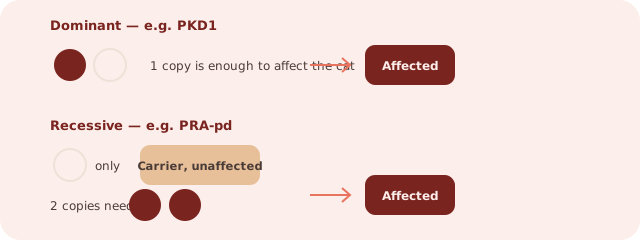
A recessive condition causing progressive retinal degeneration and, eventually, blindness. Because it's recessive, a cat needs two copies to actually be affected — a single-copy carrier shows nothing outwardly but can still pass the gene on to kittens. DNA testing catches both carriers and affected cats before it ever becomes visible in the cat. CFA's own breeder education also documents a distinct, separate recessive form of PRA in some Persian lines specifically, with onset around 12–15 weeks — one more reason routine eye checks on a litter are worth doing even before any DNA panel result comes back.
| Condition | What it affects | Screening method |
|---|---|---|
| Chocolate / pointed carrier status | Coat colour genetics, relevant to CPC lines | DNA panel |
| Blood type (A/B/AB) | Neonatal isoerythrolysis risk in kittens | DNA or blood typing |
| Hypertrophic cardiomyopathy (HCM) | Heart muscle thickening | Cardiac ultrasound (echocardiogram); no single-gene DNA test covers all cats |
| General dental and airway health | Comfort and long-term quality of life given breed head shape | Routine veterinary exam |
CFA's own breeder education also flags a handful of conditions that aren't unique to Persians but are worth knowing for any pedigreed program: hydrocephalus, which CFA notes Persian head type can raise susceptibility to when skull shape is pushed to an extreme (see the note in Chapter 3); cryptorchidism, undescended testicles in a male kitten, which should remove that male, his parents, and his littermates from consideration for breeding; and polygenic skeletal issues such as hip dysplasia and patellar luxation, which are more associated with larger breeds but possible in any cat and should not be bred forward if diagnosed.
A single copy of a recessive carrier gene is not, by itself, a reason to pull a cat from a program — over-culling shrinks genetic diversity and just trades one problem for another. A genetic test is there to inform which pairings you make next, not to trigger panic over one result. When you're unsure what a specific result means for a pairing, talk it through with your vet or a genetics-literate mentor before making any permanent call on a cat.