
MAISON PAWZCATTERY
Inquire Now
Honestly, the birth is often the easy part next to the eight to fourteen weeks that follow it.
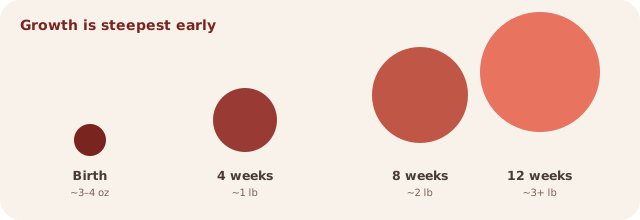
Weaning typically begins around 4 weeks and wraps up between 6 and 8 weeks for most kittens, though some will keep comfort-nursing a little past that as the queen gradually distances herself — follow the litter's own pace rather than a date on your calendar. Push it faster than they're ready for and you'll see real distress and setbacks, not a shortcut.
The socialisation window, roughly weeks 3 through 9, is the single most important stretch of a kitten's life, and the research on this is specific, not just breeder folklore: kittens that don't get calm, positive handling from a variety of people before about 7 weeks old are measurably harder to socialise later, sometimes permanently more people-shy. Gentle, varied handling during this window shapes a cat's lifelong temperament more than anything else you'll do as a breeder, full stop — and it's exactly why we handle every kitten daily from day one rather than waiting until they're "old enough to matter."
We use AAHA (American Animal Hospital Association) protocols as our baseline, adjusted with our vet for our own cattery's needs — first round typically at 6 to 8 weeks, with boosters roughly every 3 to 4 weeks until 16 weeks old, since a kitten's maternal antibodies fade unpredictably during that stretch and can otherwise leave a gap in protection. Kittens go to new homes fully vetted, vaccinated on schedule, and litter-trained, not one day earlier, no matter how much a buyer wants to take one home sooner.
A kitten that looks like a star at six weeks can change a surprising amount in type by the time it's grown. Most experienced breeders wait until at least 4 months and a show or two under its belt before confidently calling a kitten show quality out loud — get your mentor's eyes on it first, before you make that claim to a buyer.
Plan to retire breeding cats by around age 5, and offer a foundation cat back to its original breeder as a courtesy before altering or rehoming it, even if you expect the answer to be no. A workable long-term rule: to keep a new kitten in your program, place another cat first.