Chapter 14 · Part III · Aspiring & Active Breeders
Showing Your Cat
Showing is how you find out whether your program is actually producing cats that meet the written standard, and not just cats you personally love the look of — which, we'll be honest, is not the same thing. It's also still the fastest way to meet mentors and see "good type" in person instead of in photos, where a lot of faults conveniently disappear.
A basic show kit
A benching cage or cage curtains (many shows are now bring-your-own-cage).
Litter pan and a small supply of your usual litter.
Grooming tools: combs of varying tooth spacing, a pin brush, no-rinse and dry shampoo, grooming powder, and eye-cleaning pads.
A carrier, a cart or grooming table to move gear, and "please do not touch" cage signage.
A small first-aid and basic-medication kit for both cat and handler.
Show-day flow
Check in, pay any remaining entry fees, and note your entry numbers before anything else.
Set up your benching cage without blocking the aisle, then give your cat time to settle before you start grooming — a stressed cat doesn't hold a groom well anyway.
Listen for your number. Arrive on the first call, not the second or third; judges notice, and so do the other exhibitors waiting on you.
In the ring, place your cat quietly in its judging cage and step back. Exhibitors don't handle or fuss over the cat once judging has started — that's the judge's job now, not yours.
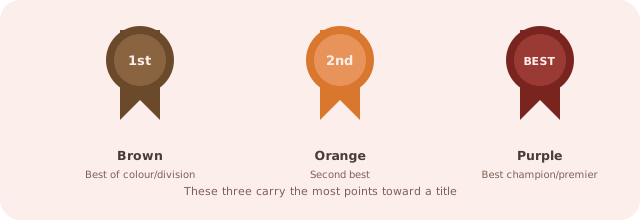
The ribbon colours that matter most on a judging table — learn these before your first show so you're not guessing what just happened.
After judging, ribbons go up by placement. Brown (best of colour or division) and orange (second) typically carry the most points toward a title, alongside purple for best champion or premier of the ring.
Stay until every ring you've entered has finished its finals. Leaving early is, hands down, the most common reason exhibitors miss an award they actually won.
Showing on a budget
Start in premiership class with an altered cat. Entry costs the same, but the stakes and the learning curve are both gentler while you figure out the process.
Share hotel rooms and travel with other local exhibitors on any show that requires an overnight stay.
Build a grooming kit gradually instead of buying everything at once — most of it lasts for years, so there's no rush.
Ask your mentor which shows in your region actually give a new exhibitor the best value for a first circuit; not every show is worth the entry fee for a beginner.