
MAISON PAWZCATTERY
Inquire Now
This is the chapter that separates Persians from almost every other breed, full stop. The coat that makes them so striking demands daily attention — skip it for even a week or two and we've seen mats form close enough to the skin that a full shave-down is the only humane option left.
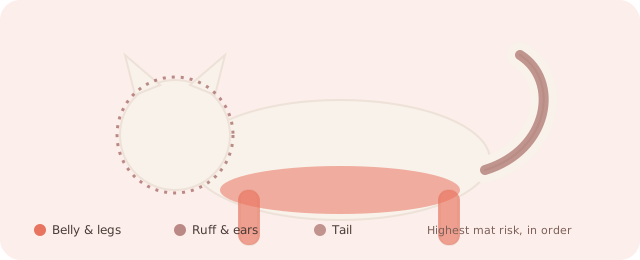
Not every Persian coat behaves the same way, and it's worth knowing which type you're dealing with before you blame your grooming routine. Blacks, reds, and most whites tend toward a harder, silkier, more resilient coat that holds its shape. Blues and creams — the dilute colours — typically run softer and cottony, stand further off the body, and mat noticeably faster. If your dilute-coloured cat seems to need combing twice as often as everyone else's solid black, that's not you doing something wrong; it's a real, documented coat-texture difference between colours, not just a difference in colour itself.
Most cats can go a lifetime without a bath. Persians can't — plan on every 4 to 6 weeks for a pet cat, more often if you're keeping one in coat for the show ring. Use a shampoo formulated for cats, never human shampoo, which disrupts a cat's skin pH and can leave the coat worse off than before you started. Rinse until the water runs completely clear, since leftover residue is a mat magnet on its own, and dry all the way through on a low, cool setting before leaving the cat unsupervised — a damp undercoat left to air-dry is one of the fastest ways to grow a mat overnight. Show breeders often go a step further with colour-specific finishing products — a bluing rinse to keep a white coat from yellowing, for instance — but test anything new on a small patch first, since some sprays marketed for solid colours can actually make faint ghost tabby markings more visible rather than less.
Feed a quality, complete-and-balanced food matched to life stage — kitten, adult, senior. Because of their facial structure, some Persians do noticeably better with kibble shaped or sized for easy pickup, and a wide, shallow bowl cuts down on whisker stress and the food-smeared-on-face look that flat-faced cats are prone to. Keep fresh water available at all times; plenty of cats drink more from a circulating fountain than they ever would from a static bowl.
Scoop daily, wash the box weekly, and pay attention to changes in frequency, straining, or consistency — that's often the earliest visible sign something's wrong internally, well before a cat looks or acts sick. Long-haired breeds also track litter into their coat more than shorthairs do, so a low-tracking litter and a mat placed right by the box go a long way toward keeping the routine clean.
Wide-tooth steel comb · slicker brush · cat-safe eye wipes or a soft microfiber cloth · cat shampoo and conditioner · a low-heat dryer or towel routine · blunt-tipped scissors for sanitary trims (or leave this step to a groomer if you're not confident with scissors near skin).